
Clarity. Continuity. Broadcast.
Broadcast Radio
Broadcast radio remains a critical communication platform, requiring reliable systems to deliver clear, uninterrupted audio to audiences across regions. As broadcasting environments evolve, ensuring signal quality, efficient workflows and network reliability is essential.
About Broadcast Radio
We provide specialised broadcast radio solutions that support the complete audio production and distribution chain, from content acquisition and live production to contribution, monitoring, transmission and playout. These solutions help broadcasters enhance audio quality, improve operational efficiency, reduce downtime and deliver engaging listener experiences across multiple platforms.
Radio Production
We provide integrated radio production solutions that support audio mixing, remote contribution, commentary and monitoring, helping broadcasters streamline operations, enhance on-air quality and deliver engaging content across studio, remote and multi-platform productions.
Explore More →
Featured Broadcast Radio Products
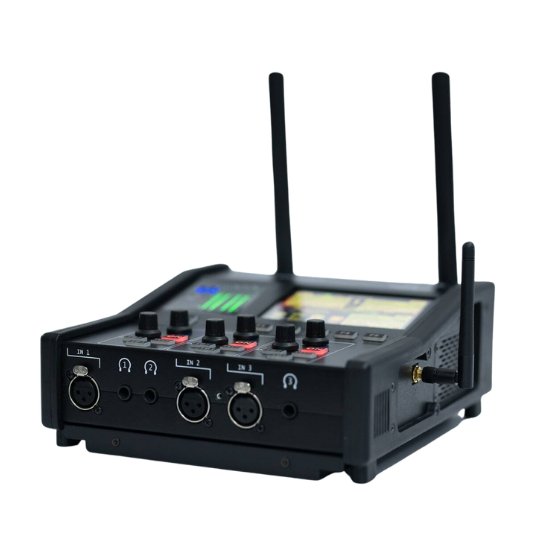
Prodys Quantum2 W
Bidirectional Transmission of Audio and Video
An all-in-one portable commentary unit that delivers reliable bidirectional audio, video return feeds and resilient IP connectivity for live sports, events and remote broadcast productions.
Explore More →
Why Concilium
Concilium delivers trusted technology solutions backed by global partnerships, certified expertise, and strong local support. We help organisations implement reliable, high-performance systems with confidence, from consultation and design to deployment and long-term technical support.
→ Trusted technology partner in South Africa and across Africa
→ Global manufacturers with proven, industry-leading solutions
→ Certified technical expertise across test, broadcast, and network environments
→ End-to-end support consultation, design, deployment, optimisation
→ Reliable local service and long-term technical partnership
→ Solutions built for performance, accuracy, and operational continuity




















Frequently Asked Questions
What broadcast radio solutions does Concilium provide?
We provide solutions for studio and remote radio production, cloud-based contribution, broadcast mixing, audio processing and Audio-over-IP transport. Our portfolio includes technologies from Prodys, Digigram and DHD.audio, covering browser-based contribution, mixing consoles, IP audio cores, portable codecs and high-density rack systems.
Can these solutions support both studio-based and remote production?
Yes. The portfolio supports permanent on-air studios, production workstations, outside broadcasts, remote commentary, field reporting and browser-based guest contribution. Solutions can be selected for individual contributors or configured for multi-studio and multichannel operations.
Can existing broadcast infrastructure be expanded without replacing the complete system?
Yes. Modular consoles, configurable processing cores and scalable IP codecs allow capacity to be expanded according to operational requirements. Available interfaces support the connection of analogue, AES3 and compatible Audio-over-IP infrastructure.
How can contribution reliability be maintained over public or variable IP networks?
Selected codecs provide network-diversity, bonding, forward error correction, dual streaming and automatic backup capabilities. The appropriate approach depends on the available networks, required latency and importance of the contribution path.
Can radio systems be managed and monitored remotely?
Yes. Selected solutions provide browser-based control, central codec management, remote monitoring and configuration tools. This allows technical teams to manage codecs, routing and contributor access without being physically present at every location.
How does Concilium help determine the correct radio production architecture?
We assess the required number of studios, contributors, audio channels and transmission paths, together with connectivity, redundancy and workflow requirements. We can then recommend a suitable combination of cloud services, mixing platforms, processing cores and IP codecs.